Mathi Hospitals
Typically replies within minutes
×
Do you have any questions about our Hospitals? Feel free to ask us!
 Chat With Us
● Online
Typically replies within minutes
× Chat With Us
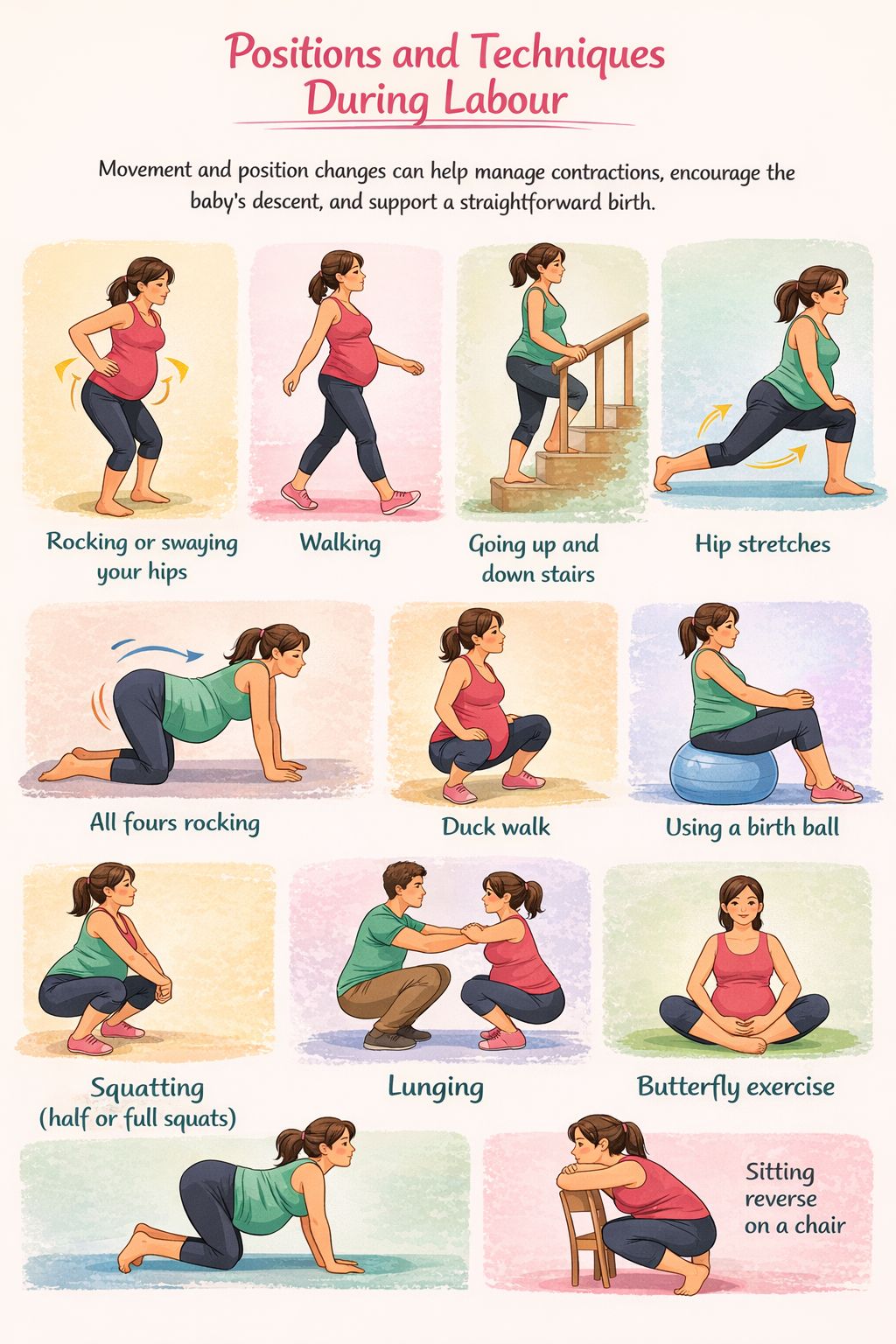
Labour is a natural and active process. The position you choose during labour can influence how comfortable you feel, how effectively your contractions work, and how smoothly your baby moves through the birth canal. Allowing your body to move freely and change positions often helps labour progress better and can reduce discomfort. There is no single correct position for all women. The most suitable position is the one that feels comfortable and safe for you at that moment.
During early labour, the focus is on staying calm, relaxed, and conserving energy. Gentle movements such as walking, standing, or swaying can help contractions become regular and effective. Upright positions use gravity to encourage the baby to move down into the pelvis and may help labour establish naturally. Resting between contractions and staying hydrated are important during this phase.
Leaning forward against a wall, bed, or support person can be very comforting during labour. This position helps reduce pressure on the lower back and may ease back pain. It also encourages the baby to rotate into a more favourable position, which can make labour easier and more comfortable.
Sitting on a chair or a birthing ball allows you to remain upright while resting. Gentle rocking or circular movements of the pelvis can help ease discomfort and encourage the baby’s descent. These positions are particularly helpful when you feel tired but still want to stay active during labour.
The hands-and-knees position involves kneeling with the hands supported on the bed or floor. This position is especially useful for women experiencing back labour. It helps relieve pressure on the spine, reduces back pain, and can assist the baby in rotating into a better position for birth.
Lying on the left side with pillows for support is a restful and comfortable position during labour. It improves blood flow to the baby and helps prevent dizziness or exhaustion. This position is often recommended when the mother needs rest, when blood pressure requires monitoring, or when an epidural has been given.
As labour becomes stronger, many women naturally feel the urge to change positions frequently. Shifting positions helps prevent fatigue, improves comfort, and allows labour to progress effectively. Listening to your body and responding to its cues is important during this stage. Support from your healthcare team can help you find positions that are both comfortable and safe.
During the pushing stage, positions that open the pelvis and allow effective pushing can be beneficial. Upright or supported positions such as squatting, sitting, or side-lying can help the baby move down more easily. Some women prefer semi-reclined positions, especially when pain relief such as an epidural is used.
In a semi-reclined position, the back is supported at an angle rather than lying flat. This position offers comfort, allows good access for monitoring, and is commonly used in hospital settings. It is generally more effective and comfortable than lying flat on the back.
Lying flat on the back for long periods is usually not recommended during labour. This position can reduce blood flow to the baby, increase discomfort, and make pushing less effective. Short periods may be required for examinations, but changing positions whenever possible is encouraged.
Having an epidural does not mean you must remain still or lie flat. Many women can continue to change positions with assistance. Side-lying, semi-reclined, and supported sitting positions are commonly used and can be adjusted to maintain comfort and safety. The healthcare team will help reposition you as needed.
Your healthcare team may guide you toward certain positions if continuous monitoring is required or if there are concerns about your or your baby’s well-being. Even in these situations, small position changes are often possible. Your comfort and safety always remain a priority.
Your body knows how to labour and give birth. Movement and position changes can help you cope better with labour and support a smoother birth experience. Trust your body, ask for help when needed, and remember that support is always available.
We believe in respectful and individualised maternity care. We encourage movement during labour, support comfort-focused birth practices, and adapt positions to suit each mother’s needs while ensuring safety for both mother and baby.